
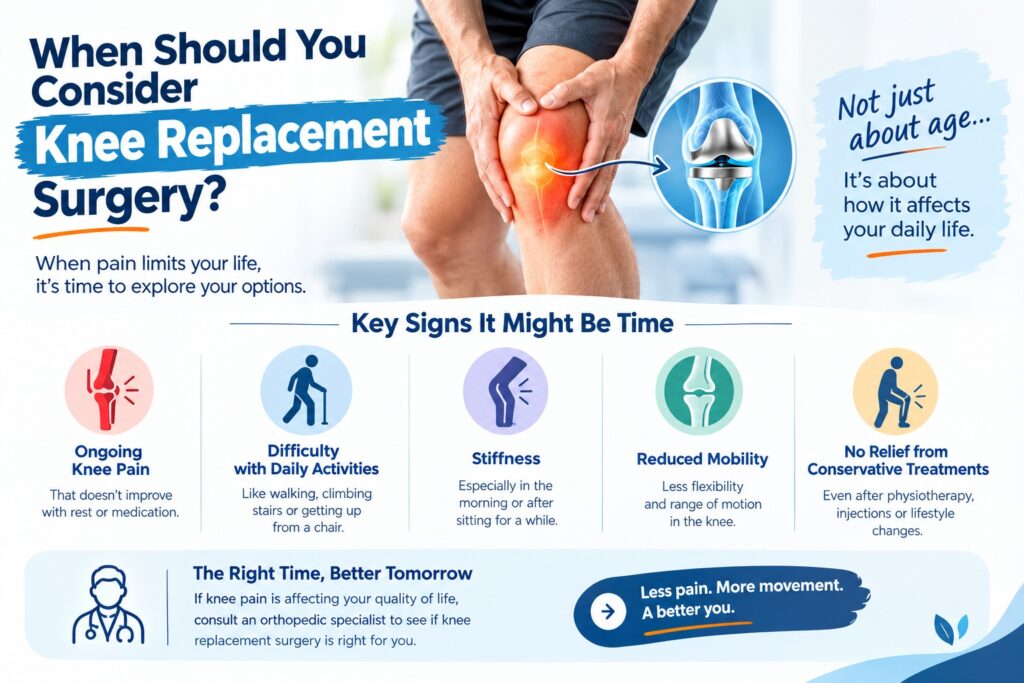
When Should You Consider Knee Replacement surgery ?
You used to enjoy your morning walk. Now you think twice before climbing the stairs, and a long trip to the market feels like a chore. Maybe you have started saying no to family functions because sitting for long hours makes your knees ache.
If this sounds familiar, you are not alone. Many people who ask about knee replacement surgery in Mumbai are not looking for surgery. They simply want their old routine back. Let’s go through when replacement makes sense, and when it may not be needed yet.
What Is Knee Replacement Surgery?
Your knee is a hinge joint. The ends of the bones are covered by smooth cartilage, which lets them glide without friction.
Over time, this cartilage can wear away. The bones then rub against each other, causing pain, swelling, and stiffness. This is called osteoarthritis, the most common reason for knee replacement.
In surgery, the damaged surfaces are removed and replaced with smooth metal and medical-grade plastic parts. Think of it as resurfacing a worn-out joint so it can move comfortably again.
What Are the Signs Your Knee May Need Replacing?
There is no single moment when everyone should have surgery. But certain signs tell you the joint may be badly worn.
- Pain that stops you from walking, climbing stairs, or getting up from a chair
- Aching at night or while resting
- Stiffness and swelling that keep returning
- Knees bending inward or outward (bow legs or knock knees)
- Little or no relief from painkillers or injections
- Difficulty with simple tasks like dressing, bathing, or using an Indian-style toilet
Pay attention to how your knee affects your life, not just how strong the pain feels. If your independence is shrinking, that matters.
Which Treatments Should You Try First?
Reassuringly, most people do not need surgery straight away. Doctors usually begin with simpler options.
- Physiotherapy to strengthen the muscles that support the knee
- Weight management, since every extra kilo adds pressure on the joint
- Pain-relief medicines and supplements, when advised by your doctor
- Walking aids or knee supports for short-term comfort
- Joint injections that may ease pain for a few months
These steps can delay surgery by years for some people. If they stop working, replacement becomes a reasonable next conversation.
Am I Too Young or Too Old for Knee Replacement?
This is one of the most common worries, and the answer is that age alone is not the deciding factor.
Modern implants last many years, so surgery is now considered for younger adults with severe joint damage too. At the same time, many patients in their seventies and eighties do very well. What matters more is your general health, your pain level, and your goals.
Your doctor will look at your heart, blood sugar, and overall fitness before recommending surgery.
What Tests Will Your Doctor Advise?
A careful check-up comes first. A specialist offering knee replacement surgery in Mumbai, such as Dr. Sanesh Tuteja, will usually begin by listening to your story and examining how you walk and move.
- X-rays show how much cartilage is left and how the bones are aligned
- Blood tests check your general health and infection markers
- An MRI may be advised in select cases
Surgery is recommended only when the findings match your symptoms. You should never feel rushed into a decision.
What Is Recovery Like After Knee Replacement?
Recovery is often the biggest fear, so let’s be honest about it. You will usually be encouraged to stand and take a few steps within a day. Some soreness is normal. Physiotherapy starts early and is the key to a smooth recovery.
A rough timeline looks like this:
- First 2 weeks: Walking with support, managing swelling, gentle exercises
- 6 weeks: Walking more comfortably, returning to light daily work
- 3 months: Much better strength and movement
- 6 months to a year: Full benefit of the new joint
Every person heals at their own pace. Following your exercise plan matters far more than rushing.
How Can You Prepare for Surgery?
A little preparation helps a lot.
- Strengthen your legs with exercises before surgery
- Keep blood sugar and blood pressure under control
- Arrange your home with a firm chair, non-slip mats, and a Western-style toilet seat if needed
- Ask a family member to stay with you for the first few weeks
When Should You Speak to a Specialist?
Consider a consultation if knee pain has lasted for months, if you have tried other treatments without relief, or if daily life feels harder each year. Waiting too long can sometimes cause more stiffness and weakness, which may make recovery slower.
Final Thoughts
Knee pain should not decide how you live. If your knee is limiting your walking, sleep, or independence, it is reasonable to ask whether replacement is the right step.
If you are exploring knee replacement surgeon in Mumbai, consider meeting an experienced orthopaedic surgeon like Dr. Sanesh Tuteja. An honest assessment will tell you whether you need surgery now, later, or not at all.
Your knees have carried you for decades. A conversation today could help you move with comfort again.