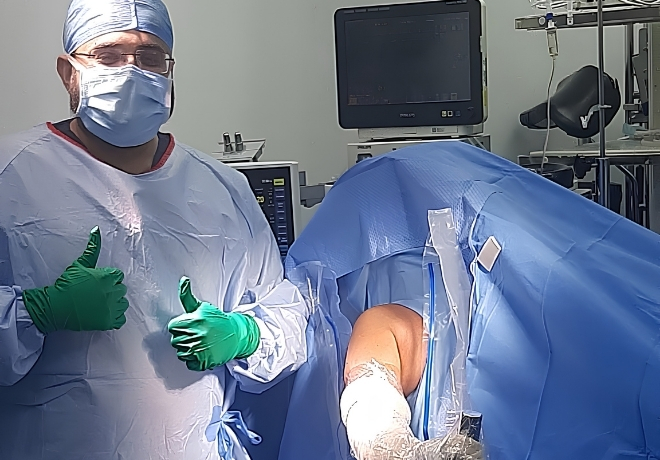
A minimally invasive procedure that uses small incisions to diagnose and treat joint problems. It helps reduce pain, scarring, and recovery time, allowing you to return to normal activities faster.
Advanced arthroscopic techniques also improve surgical precision and reduce damage to surrounding tissues. This approach is commonly used for knee, shoulder, and other joint conditions requiring faster recovery and improved mobility.
This procedure restores stability in joints affected by ligament injuries such as ACL or PCL tears. The goal is to rebuild strength, improve movement, and help you safely return to your daily or sports activities.
Treatment plans are personalized based on the severity of the injury and activity level of the patient. Structured rehabilitation after surgery also plays an important role in restoring balance, flexibility, and joint function.
These treatments focus on repairing damaged cartilage in the joints to reduce pain and improve function. They are especially helpful in preventing further joint damage and delaying the need for major surgery.
Cartilage restoration techniques aim to improve cushioning within the joint and support smoother movement. Early treatment can help preserve joint health and maintain long-term mobility and comfort.
An advanced technique that uses robotic assistance for greater precision during joint replacement surgery. This allows for better alignment, improved outcomes, and a smoother recovery experience.
Robotic technology helps create a more personalized surgical plan based on the patient’s anatomy. It also supports accurate implant positioning, which may improve joint function and long-term results.
Focused on treating joint problems early, these techniques aim to preserve your natural joint and avoid or delay replacement surgery. The approach helps maintain mobility and supports long-term joint health.
These treatments may include minimally invasive procedures, physiotherapy, and regenerative approaches depending on the condition. Early intervention can help reduce pain, improve movement, and slow further joint damage.