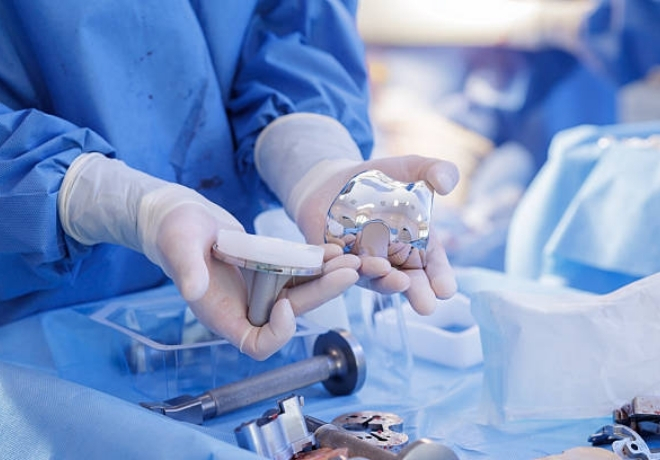
Robotic assistance improves the precision of implant positioning and alignment, which can help with longevity and function, but the surgeon's judgment in planning and executing the procedure remains the deciding factor in outcomes.
Knee Replacement Surgeon in Mumbai
If knee pain has started controlling your day, which stairs you avoid, how far you can walk, or whether you can sit on the floor, it may be time to speak with a knee replacement surgeon in Mumbai rather than another round of painkillers. Dr. Sanesh Tuteja evaluates the joint, the cause of the damage, and your lifestyle before recommending any surgical option and only moves to replacement once conservative care has genuinely been exhausted.
What Does a Knee Replacement Surgeon Actually Do?
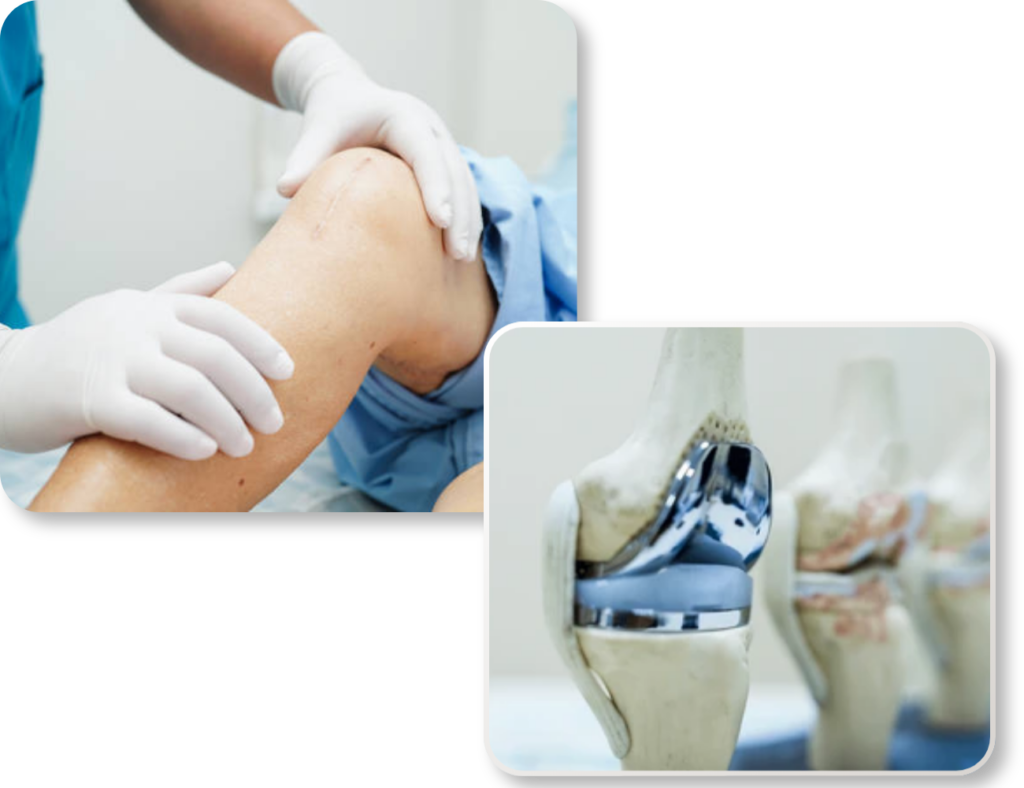
A knee replacement surgeon doesn’t just install an implant; they decide whether surgery is the right call, which type of replacement fits your joint, and how to position the implant for the best long-term result. The knee is a hinge joint formed where the thighbone (femur), shinbone (tibia), and kneecap (patella) meet, cushioned by cartilage that wears down with arthritis, age, or injury. Once that cartilage is gone, the surgeon resurfaces the damaged bone ends with metal and polyethylene components shaped to move the way a healthy knee would.
Durable, day-to-day pain relief, not a temporary fix
A knee that bends, straightens, and bears weight reliably
A realistic return to walking, stairs, travel, and the activities that matter to you
Types of Knee Replacement Surgery Dr. Sanesh Tuteja Performs in Mumbai
Not every damaged knee needs the same operation. Dr. Tuteja chooses between these approaches based on imaging, joint examination, and how much of the knee is actually affected.
-
Total Knee Replacement (TKR)
-
Partial Knee Replacement (PKR)
-
Robotic-Assisted Knee Replacement
-
Revision Knee Replacement
All three compartments of the knee, the surfaces under the kneecap, and both sides of the joint are resurfaced with implants. This is the most common procedure for advanced, widespread arthritis.
Best suited for:
- Advanced osteoarthritis affecting the whole joint
- Rheumatoid arthritis with significant joint destruction
- Severe deformity (bow-leg or knock-knee) from long-term joint wear
Only the damaged section of the knee is replaced, leaving healthy bone, cartilage, and ligaments untouched. It’s a smaller operation with a faster recovery, but only appropriate when damage is confined to one compartment.
Best suited for:
- Early-to-moderate arthritis limited to the inner or outer side of the knee
- Younger, more active patients who want to preserve natural knee tissue
- Patients whose ligaments remain healthy and stable
Robotic systems let Dr. Tuteja map your knee’s anatomy before the first incision and verify implant alignment in real time during surgery, improving precision in implant positioning and soft-tissue balance.
Best suited for:
- Patients wanting the highest achievable implant accuracy
- Complex deformities where manual alignment is harder to judge
- Cases where precise ligament balancing meaningfully affects long-term outcomes
When a previous knee replacement has loosened, worn out, or become infected, Dr. Tuteja performs revision surgery to replace the failing components and restore function.
Best suited for:
- Implant loosening or wear after 15+ years of use
- Infection around a previous implant
- Instability or persistent pain following an earlier replacement
Who Should Consult a Knee Replacement Surgeon?
Dr. Sanesh Tuteja evaluates patients for knee replacement when these conditions are confirmed and meaningfully affecting quality of life:
Osteoarthritis the most common reason; cartilage breakdown leads to bone-on-bone friction, pain, and stiffness that worsens over months or years.
Rheumatoid Arthritis once inflammation has caused structural joint damage that medication alone can no longer control.
Post-Traumatic Arthritis arthritis that develops years after a fracture, ligament injury, or dislocation around the knee.
Avascular Necrosis loss of blood supply to the bone beneath the joint surface, causing it to collapse.
Significant Knee Deformity bow-leg or knock-knee patterns that have progressively damaged the joint surface.
Failed Previous Knee Surgery when an earlier repair or replacement hasn’t delivered lasting results.

Your Treatment Journey with Dr. Sanesh Tuteja
Step-1
Clinical Evaluation
A physical assessment of knee alignment, stability, and range of motion, with X-rays typically taken the same visit. MRI is used selectively for complex or unclear cases.
Step-2
A Plan for Your Knee and Your Life
Dr. Tuteja weighs your imaging, activity level, and goals to decide whether conservative treatment, partial replacement, total replacement, or a robotic-assisted approach fits best, explaining the reasoning, not just the recommendation.
Step-2
Surgery at Fortis Hospital, Mulund
Procedures are performed at Fortis Hospital, Mulund, a NABH-accredited multispecialty hospital with dedicated orthopedic infrastructure, in-house anesthesia, and ICU backup if ever needed.
Step-2
Recovery and Follow-Up
Guided physiotherapy typically starts within days of surgery to rebuild strength and range of motion progressively, with scheduled follow-ups to track healing and implant function.
Non-Surgical Treatment Comes First
Surgery is recommended only once appropriate conservative care hasn’t resolved the problem:

Physiotherapy strengthening and mobility work that's often sufficient for early to moderate arthritis

NSAIDs or short-term measures to manage flare-ups, intended for short-term control rather than long-term reliance

Viscosupplementation joint lubrication injections that may ease friction and improve comfort in select cases

Corticosteroid injections can offer months of relief and help gauge how the joint responds before considering surgery
Why Patients Choose Dr. Sanesh Tuteja as Their Knee Replacement Surgeon in Mumbai
Robotic-Assisted Precision, When It Matters
Access to robotic-assisted technology for cases where implant accuracy and alignment make a measurable difference to long-term outcomes.
5,000+ Patients Treated
Across Knee, Shoulder, and Elbow Surgery, Giving Treatment Recommendations a Foundation in Real Outcomes Rather Than General Protocol Alone.
Globally trained, Mumbai-based
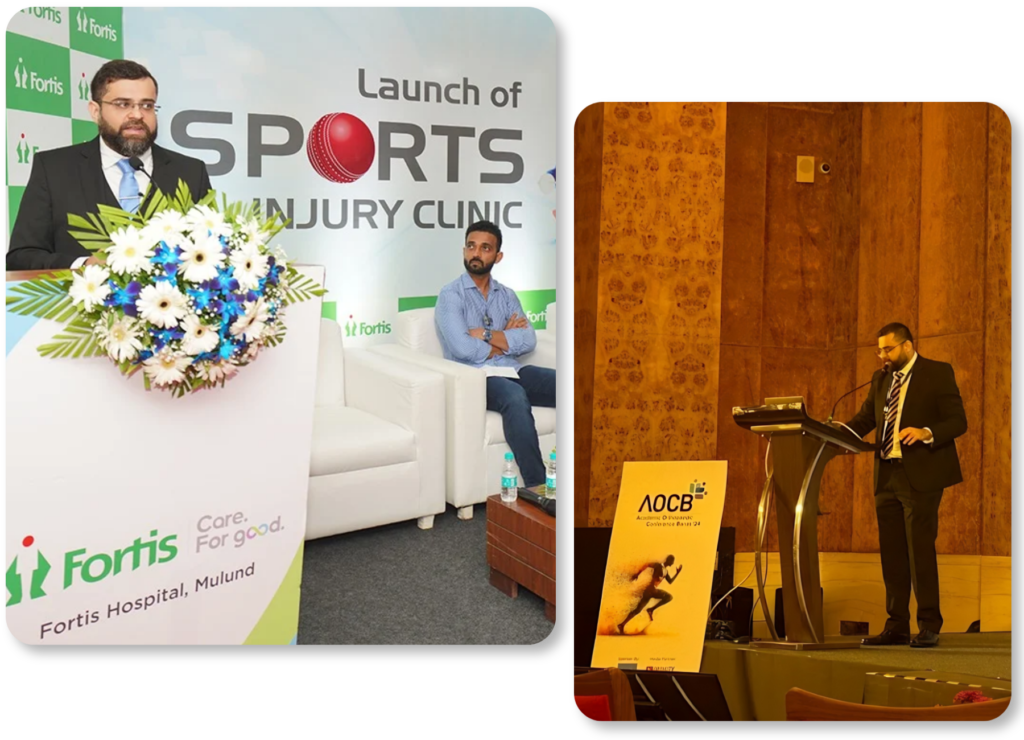
International Surgical Training is combined with an established Mumbai practice at Fortis Hospital, Mulund.
Honest, No-Pressure Communication
Patients consistently note that Dr. Tuteja explains the condition clearly and recommends surgery only when it's genuinely warranted, not as a default next step.
FAQs
Dr. Tuteja assesses this based on the extent of joint damage on imaging and how much pain and stiffness affect your daily life, not on age or X-ray findings alone. Many patients improve significantly with physiotherapy and injections and never need surgery.
Yes, simultaneous bilateral knee replacement is possible for select patients with similar damage in both knees, but Dr. Tuteja decides this case by case based on overall health, age, and anesthesia risk. Staged surgery a few weeks apart is often the safer route.
Most patients begin walking with support within a day or two of surgery and return to most daily activities within 6–12 weeks, with continued improvement over the following months through guided physiotherapy.
Partial replacement resurfaces only the damaged section of the knee and keeps healthy tissue intact, while total replacement resurfaces the entire joint. The right choice depends on how much of the knee is actually affected.
Modern implants are generally built to last 15–20 years or longer, depending on activity level, weight, and how well post-surgical rehabilitation is followed.