
Why Does My Elbow Hurt During Push-Ups?
You drop down for a push-up, and there it is again: that sharp twinge or dull ache on the outside or inside of your elbow. Maybe you’ve started skipping push-ups altogether just to avoid it. If this sounds familiar, you’re not overreacting, and you’re certainly not alone. Elbow pain during push-ups is one of the most common complaints we hear from gym-goers, athletes, and even people who simply do a few push-ups each morning. Finding the right elbow pain solutions in Mumbai starts with understanding exactly why this happens in the first place.
Dr. Sanesh Tuteja, an orthopedic surgeon who treats sports-related and repetitive strain injuries regularly, often tells patients that elbow pain during push-ups usually has a clear, fixable cause. It’s rarely something to panic about, but it does deserve attention before it worsens.
Why Does the Elbow Hurt During Push-Ups?
Push-ups place significant load on your wrists, forearms, and elbows. When your form is slightly off, or when the surrounding tendons are already strained, that load concentrates right at the elbow joint, causing pain.
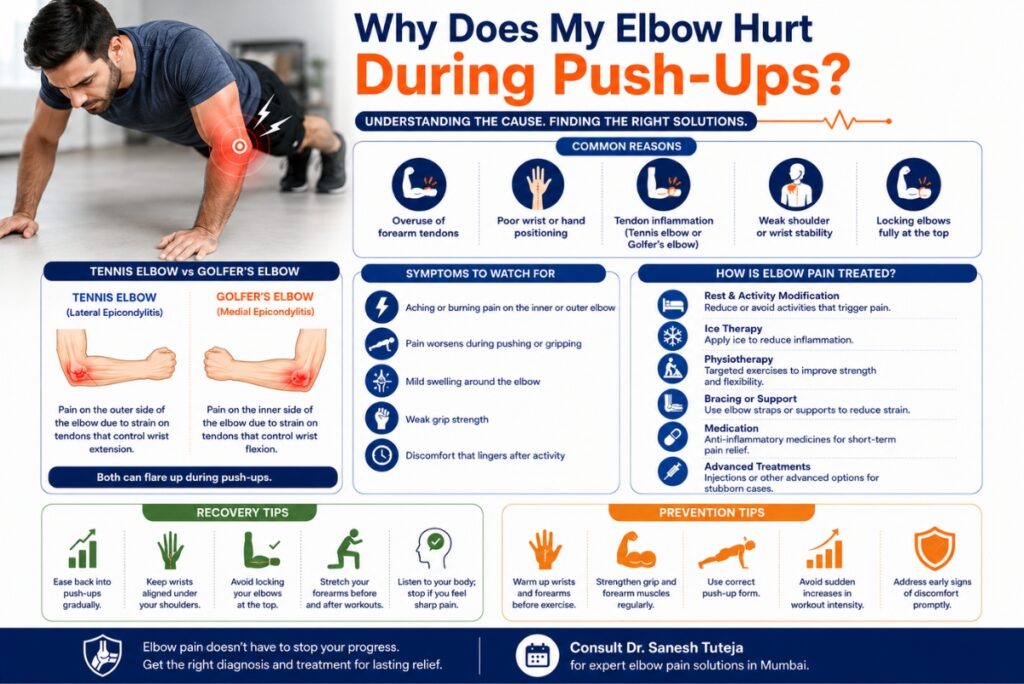
Common Reasons Behind the Pain
- Overuse of the forearm tendons from repeated pushing movements
- Poor wrist and hand positioning during push-ups, which shifts stress onto the elbow
- Underlying tendon inflammation, such as tennis elbow or golfer’s elbow
- Weak shoulder or wrist stability, forcing the elbow to compensate
- Locking the elbows fully at the top of each push-up, which adds unnecessary strain
Understanding Tennis Elbow and Golfer's Elbow
These two terms come up often, and patients are frequently surprised to learn they don’t need to play tennis or golf to develop them.
- Tennis elbow causes pain on the outer side of the elbow and happens when the tendons controlling wrist extension become irritated.
- Golfer’s elbow causes pain on the inner side of the elbow, resulting from strain on the tendons that control wrist flexion.
Both conditions can flare up during push-ups because the wrist and forearm muscles work hard to stabilize your body weight with every repetition.
What Are the Symptoms to Watch For?
- A burning or aching sensation on the inner or outer elbow
- Pain that worsens specifically during pushing or gripping movements
- Mild swelling around the elbow joint
- Weak grip strength
- Discomfort that lingers for hours after exercising
If the pain fades quickly after rest, it may simply be muscle fatigue. But if it returns every time you attempt push-ups, it’s worth getting it properly assessed.
Who Is More Likely to Experience This?
- People who recently increased their push-up intensity or frequency
- Individuals with weak forearm or shoulder muscles
- Those who type extensively or perform repetitive wrist movements at work
- Beginners attempting advanced push-up variations too soon
- Anyone with a previous elbow injury that hasn’t fully healed
How Is Elbow Pain From Push-Ups Treated?
The reassuring part is that most cases improve significantly with simple, consistent care.
- Rest and activity modification – reducing push-up frequency temporarily
- Ice therapy – to calm inflammation after activity
- Physiotherapy – targeted stretches and strengthening exercises
- Bracing or elbow support – to reduce strain during recovery
- Anti-inflammatory medication – for short-term pain relief
- Advanced treatment options – such as targeted injections for stubborn cases that don’t improve with basic care
Recovery Tips for a Pain-Free Push-Up Routine
- Ease back into push-ups gradually rather than jumping to your previous intensity
- Focus on wrist alignment, keeping hands directly under your shoulders
- Avoid fully locking your elbows at the top of the movement
- Incorporate forearm stretches before and after your workout
- Listen to your body; mild discomfort is different from sharp pain
Prevention Tips to Keep Your Elbows Healthy
- Warm up your wrists and forearms before any pushing exercise
- Strengthen your grip and forearm muscles regularly
- Correct your push-up form with guidance if you’re unsure
- Avoid sudden spikes in workout intensity
- Address early signs of discomfort instead of pushing through them
Final Thoughts
Elbow pain during push-ups is a common issue, but it doesn’t have to become a long-term obstacle to your fitness routine. With the right adjustments, a bit of patience, and proper guidance, most people recover fully and return to pain-free training.
If your elbow pain has been persistent or is affecting more than just your workouts, exploring proper elbow pain solutions in Mumbai with an experienced specialist can make all the difference. Dr. Sanesh Tuteja and his team can help identify the exact cause of your discomfort and guide you toward a recovery plan suited to your body and your goals. Don’t let elbow pain hold back your fitness journey; book a consultation and get moving again with confidence.