Yes. Shoulder replacement is a well-established, evidence-backed procedure with high success rates when performed by a trained specialist in an appropriate hospital environment. Like all surgical procedures, risks exist, including infection, implant loosening, nerve injury, and stiffness, but these are minimized through proper pre-operative screening, surgical technique, and post-operative care.
Shoulder Replacement Surgeon in Mumbai - Dr. Sanesh Tuteja
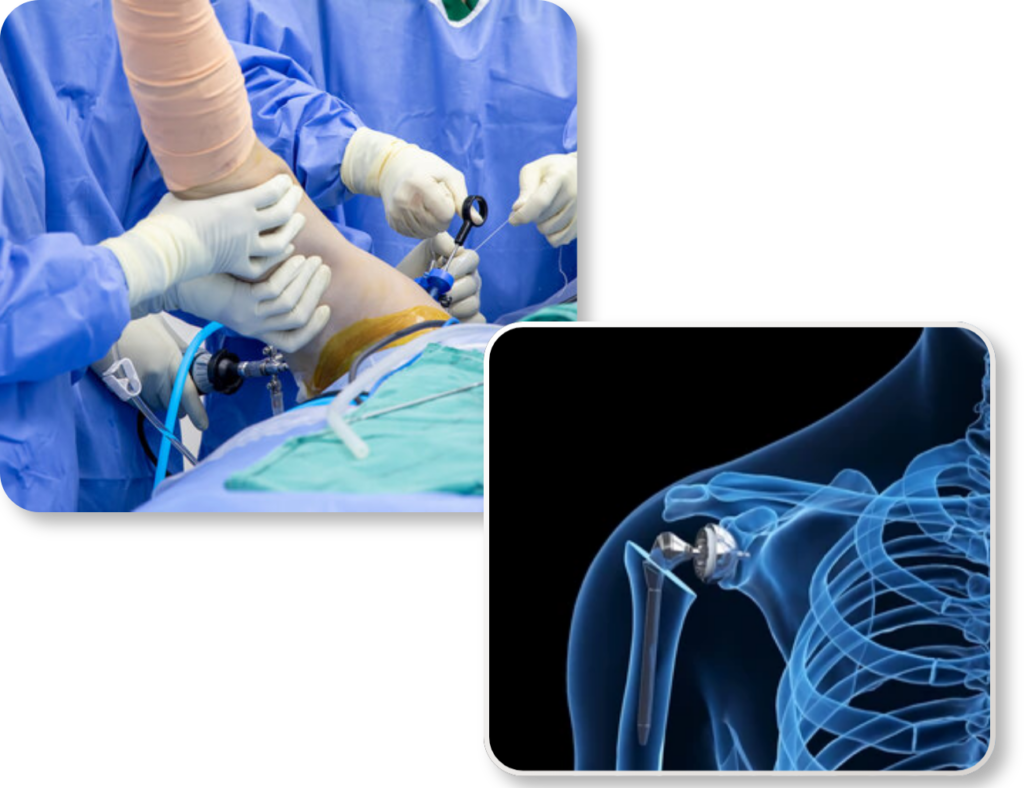
A shoulder replacement is not a routine fix it’s a precision procedure where outcomes depend heavily on the surgeon’s judgment, not just the implant used. The shoulder is a ball-and-socket joint, with the rounded head of the upper arm bone (humerus) moving inside the shallow socket of the shoulder blade (glenoid). Once arthritis, injury, or a long-standing rotator cuff tear wears down these surfaces beyond repair, a surgeon’s job is to decide which type of replacement will actually restore function for that specific patient, not just to perform “a shoulder replacement” in the generic sense.
As a dedicated shoulder replacement surgeon in Mumbai, Dr. Sanesh Tuteja evaluates each case individually before recommending a surgical path. The objective at every stage is
- Lasting relief from shoulder pain
- Recovered range of motion
- A genuine return to daily life, work, and where realistic, sport
Implants used today are built to hold up for 15–20 years, and that durability depends as much on correct surgical technique and implant selection as it does on the hardware itself.
Shoulder Replacement Procedures Dr. Sanesh Tuteja Performs
Not every shoulder replacement is the same. The correct type depends on the nature and extent of your joint damage, your rotator cuff function, and your activity goals. Dr. Sanesh Tuteja performs all three major types.
-
Total (Anatomic) Shoulder Replacement
-
Reverse Shoulder Replacement
-
Partial Shoulder Replacement (Hemiarthroplasty)
In a total anatomic shoulder replacement, both the ball (humeral head) and the socket (glenoid) are replaced with implants that replicate the shoulder’s natural structure. A smooth metal ball is attached to the upper arm bone, while a plastic socket component is fitted into the glenoid.
Best suited for:
- Shoulder osteoarthritis with an intact or repairable rotator cuff
- Rheumatoid arthritis affecting the shoulder joint
- Post-traumatic arthritis following old shoulder injuries
Expected outcome: Significant pain relief, restored range of motion, and return to normal daily activities within 3–6 months of guided rehabilitation.
In a reverse shoulder replacement, the positions of the ball and socket are switched: the metal ball is placed on the shoulder blade side, and the socket on the arm bone side. This configuration allows the deltoid muscle to take over the role of a damaged rotator cuff, enabling movement even when the cuff is severely torn or non-functional.
Best suited for:
- Rotator cuff tear arthropathy (a large, long-standing rotator cuff tear that has caused joint degeneration)
- Severe shoulder arthritis combined with rotator cuff failure
- Failed previous shoulder replacement
- Complex shoulder fractures in older patients
In hemiarthroplasty, only the ball portion of the shoulder joint (the humeral head) is replaced. The natural socket is left intact.
Best suited for:
- Severe shoulder fractures where the ball is damaged but the socket is healthy
- Avascular necrosis (loss of blood supply to the humeral head)
- Certain cases of proximal humeral fractures in older patients
Your Treatment Journey with Dr. Sanesh Tuteja
Step-1
Clinical Evaluation
Your consultation begins with a thorough clinical examination assessing shoulder range of motion, strength, stability, and pain patterns. X-rays are typically taken on the same visit. Advanced imaging (MRI or CT scan) may be requested for complex cases.
Step-2
Treatment Planning
Based on your diagnosis and your lifestyle, Dr. Tuteja outlines the most appropriate treatment path. For many patients, a structured non-surgical program, physiotherapy, anti-inflammatory medication, or a targeted injection is the starting point.
Step-2
Surgery at Fortis Hospital Mulund
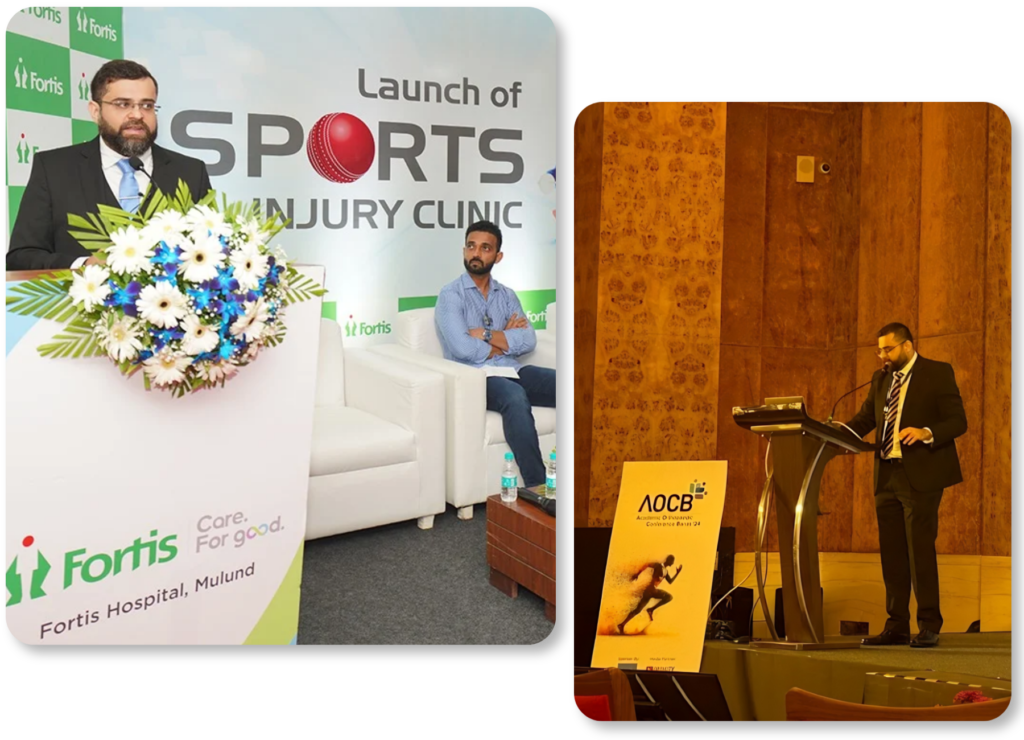
The procedure is performed at Fortis Hospital, Mulund, a NABH-accredited, full-infrastructure multispecialty hospital with dedicated orthopedic facilities, an anesthesia team, and ICU backup.
Step-2
Rehabilitation and Recovery Monitoring
Recovery begins within days of surgery, not weeks. Guided physiotherapy is initiated early to restore movement progressively. Follow-up visits monitor healing, implant function, and recovery progress.
Non-Surgical Options Dr. Sanesh Tuteja Considers First
Surgery is recommended only once appropriate conservative care hasn’t resolved the problem:

Physiotherapy & Exercise Rehabilitation
A structured rehabilitation program improves shoulder strength, flexibility, posture, and movement while helping reduce pain and restore everyday function.

Anti-Inflammatory Medications
Medications help control pain and inflammation during flare-ups, providing short-term symptom relief and improving day-to-day comfort.

Corticosteroid Injections
Targeted injections help reduce inflammation and provide temporary pain relief, improving shoulder function while delaying the need for surgery.

Viscosupplementation Injections
Lubricating injections improve joint cushioning, reduce friction, and support smoother shoulder movement in selected cartilage-related conditions.
Why Patients Choose Dr. Sanesh Tuteja as Their Shoulder Replacement Surgeon
Specialized Shoulder Surgery Expertise
Dr. Tuteja's clinical focus on shoulder conditions, including both total and reverse shoulder replacement, shoulder arthroscopy, and rotator cuff surgery, means you're consulting a specialist, not a generalist who performs occasional shoulder replacements.
Globally Trained, Mumbai-Based
International training and exposure to advanced surgical techniques from leading institutions, combined with an established practice in Mumbai, meaning global standards delivered locally.
Over 5,000 patients treated across
Knee, shoulder, and elbow conditions; the clinical volume ensures that Dr. Tuteja's recommendations are grounded in real patient outcomes, not textbook theory.
Honest, Clinical Communication
Patients consistently note that Dr. Tuteja explains their condition clearly and doesn't recommend surgery unless it is clinically warranted. In a healthcare landscape where over-treatment is a real concern, this matters.
FAQs
If your shoulder pain is moderate, recent, and hasn't been properly treated with physiotherapy, injections, or medication, surgery is almost certainly not the starting point. Shoulder replacement is appropriate when the joint itself is structurally damaged (confirmed by imaging), pain is constant and affecting sleep and daily function, and conservative treatment over 6+ months has not provided adequate relief. A consultation with a specialist gives you an accurate answer for your specific case.
Yes, physiotherapy is an essential part of recovery. It begins within the first few days post-surgery and continues for several months. The program starts with gentle movement to prevent stiffness and progresses to strengthening exercises that restore full shoulder function. Patients who follow their physiotherapy protocol consistently achieve significantly better outcomes than those who don't.
Modern shoulder replacement implants are designed to last 15–20 years or longer, depending on activity level, implant type, surgical precision, and the patient's bone quality. While implant longevity varies by case, most patients achieve excellent functional outcomes for well over a decade.
Most patients regain meaningful shoulder function within 3–6 months. The early phase (weeks 1–6) focuses on pain management and gentle range of motion. The middle phase (6–12 weeks) involves progressive strengthening through physiotherapy. Full recovery — including return to activities like swimming, overhead work, or light sport — typically takes 6–12 months. Recovery is significantly influenced by how consistently the rehabilitation program is followed.
Many patients return to low-to-moderate-impact activities, including swimming, cycling, golf, and walking, after shoulder replacement. High-impact contact sports or heavy overhead weight-bearing activities are generally not recommended, particularly with total shoulder replacement.