
Is Warm-Up Really Important Before Exercise?
You’ve probably been there. You’re short on time, the gym slot is closing in, or you just want to get your run over with, so you skip the warm-up and jump straight into the workout. Most of us have done it at some point, and honestly, nothing bad happens… until one day it does.
So, is warming up before exercise actually necessary, or is it just something trainers say to sound thorough? Let’s break it down in simple terms.
What Exactly Does a Warm-Up Do to Your Body?
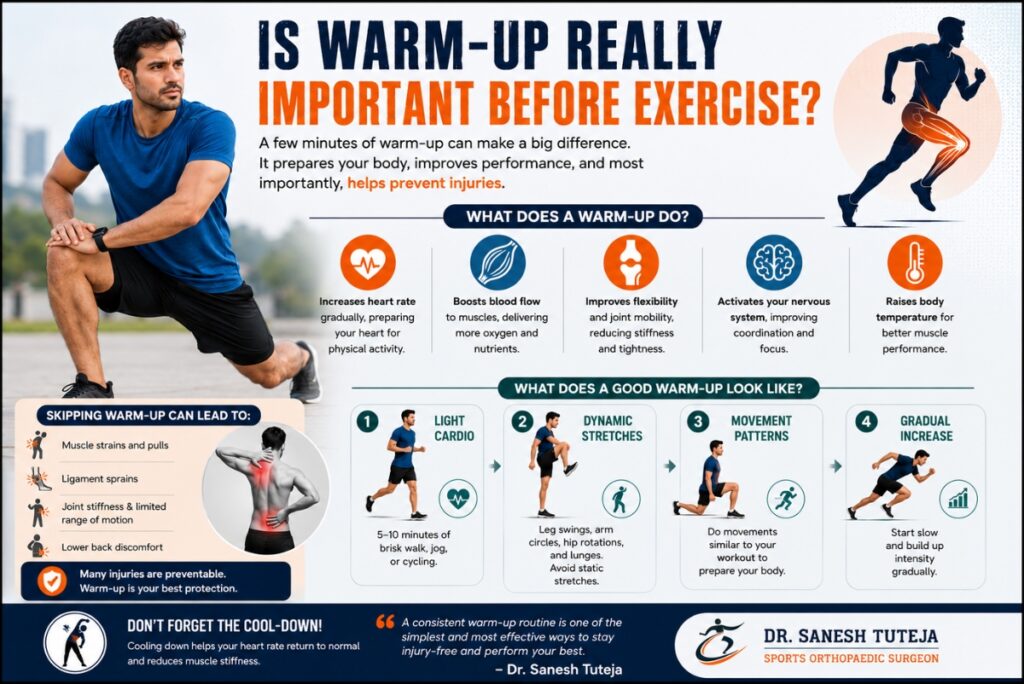
A warm-up is basically your body’s way of shifting gears from “resting mode” to “ready to move” mode. It’s not just a formality; a few real physical changes happen in those five to ten minutes:
- Your heart rate rises gradually, so your heart isn’t shocked into overdrive.
- Blood flow to your muscles increases, carrying more oxygen where it’s needed.
- Your muscles and joints loosen up, becoming more flexible and less stiff.
- Your nervous system gets “switched on,” improving coordination and reaction time.
- Your body temperature rises slightly, which helps muscles contract more efficiently.
Think of your muscles like a rubber band. A cold rubber band snaps easily if you stretch it too fast. A rubber band that’s been warmed up a little bends and stretches far more smoothly. Your muscles behave in a surprisingly similar way.
Does Skipping Warm-Up Really Increase Injury Risk?
This is the part people usually want a straight answer to, and yes, it does raise the risk, especially for certain kinds of injuries.
When you go from sitting at a desk all day straight into sprinting, heavy lifting, or a fast-paced sport, your muscles and tendons haven’t had time to prepare for that sudden demand. This can lead to:
- Muscle strains (that sudden pull you feel in your hamstring or calf)
- Ligament sprains around the knee or ankle
- Joint stiffness that limits your range of motion mid-workout
- Lower back discomfort, especially if you go straight into lifting weights
This doesn’t mean every unwarmed workout ends in injury. Plenty of people skip it and feel fine for years. But over time, repeated stress on cold muscles and joints adds up, and this is actually one of the most common reasons people end up consulting an orthopedic surgeon in Mumbai for recurring strains, joint pain, or ligament injuries that could have been avoided with a proper warm-up routine.
What Does a Good Warm-Up Actually Look Like?
You don’t need anything fancy. A good warm-up is usually 5–10 minutes and includes:
- Light cardio first A brisk walk, a slow jog on the spot, or a few minutes on a cycle to get your heart rate up gently.
- Dynamic stretches, not static ones Leg swings, arm circles, hip rotations, and lunges work better before exercise than holding a stretch for 30 seconds. Static stretching (the kind where you hold a pose) is better saved for after your workout.
- Movement patterns similar to your workout If you’re about to run, do some high knees or butt kicks. If you’re about to lift, do a few reps with lighter weight first. This “rehearses” the movement for your body.
- A gradual increase in intensity Start slow, and build up. Don’t go from zero to full sprint in the first minute.
Is a warm-up only important for athletes or serious gym-goers?
Not at all; this is a common misconception. Whether you’re:
- A student who plays badminton twice a week
- A working professional squeezing in a 20-minute home workout
- Someone over 40 getting back into fitness after a long break
- A weekend cyclist or trekker
…your body still needs that transition period. In fact, as we age, muscles and joints naturally lose some flexibility and elasticity, which makes warming up even more important, not less. This is also why many people who consult an orthopedic doctor for knee or shoulder pain are advised to build a proper warm-up habit as part of their recovery and prevention plan.
What Happens If You Warm Up but Skip the Cool-Down?
Warm-up gets most of the attention, but cooling down afterward matters too. It helps your heart rate return to normal gradually and reduces muscle stiffness the next day. So while this article focuses on warm-ups, don’t completely ignore the other end of your workout either.
Final Thoughts
Warming up isn’t about following a rulebook; it’s about giving your body a fair chance to perform well and stay injury-free. It takes just a few extra minutes, but it can save you weeks of recovery time if something goes wrong. As Dr. Sanesh Tuteja often reminds patients, most sports-related injuries seen in clinics are preventable, and a consistent warm-up routine is one of the simplest, most effective habits anyone can build regardless of age or fitness level.
If you’ve been dealing with recurring joint pain, stiffness, or a nagging injury that doesn’t seem to go away, it may be worth getting it checked by a specialist rather than pushing through it.