
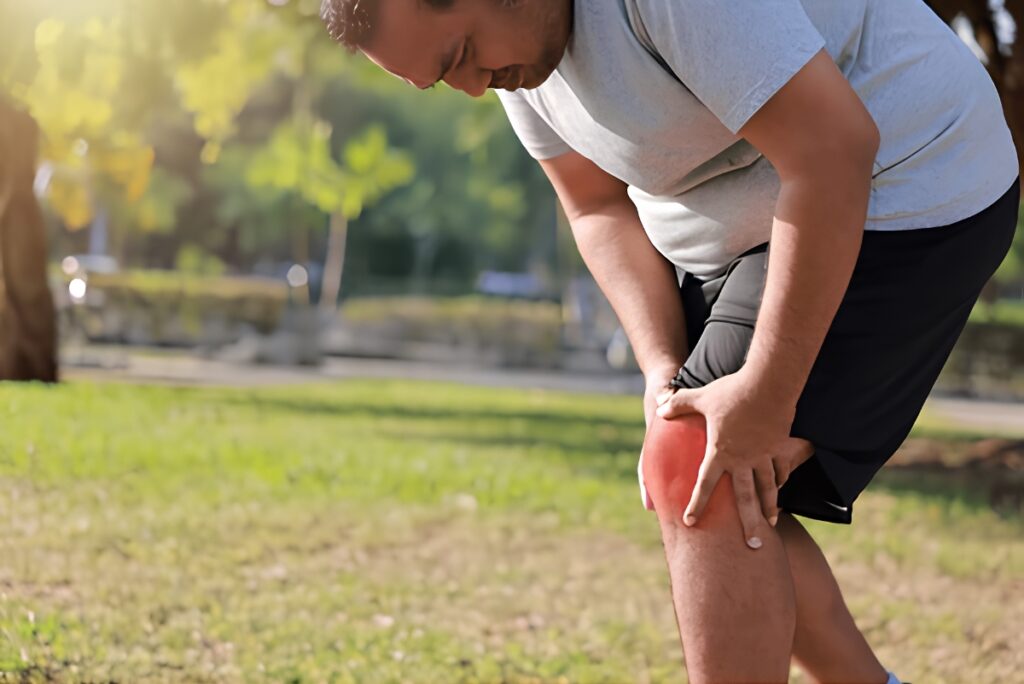
How Obesity Affects Knee and Joint Health - And What You Can Do About It
Have you ever noticed that your knees hurt more on days when you’ve been on your feet for longer? Or that climbing a flight of stairs has become something you dread rather than something you do without thinking? If you’re carrying extra weight, that daily discomfort isn’t random and it isn’t your imagination.
Obesity is one of the most significant and modifiable risk factors for knee and joint damage. Across orthopedic clinics in India, joint pain related to excess body weight is among the most frequently seen conditions. For patients searching for knee pain treatment in Mumbai, understanding the connection between weight and joint health is often the most important conversation they have with their doctor.
Dr. Sanesh Tuteja, a respected orthopedic surgeon with extensive experience treating weight-related joint conditions and sports injuries, sees this pattern every day in his practice. His message to patients is both honest and hopeful: the damage is real, but in most cases, it is also manageable and with the right approach, highly treatable.
The Mechanical Reality: What Extra Weight Does to Your Knees
The knee is the largest joint in the human body, and it bears an extraordinary amount of load. Every step you take puts pressure on your knees equal to roughly 1.5 times your body weight. Going up or down stairs increases that to about 3–4 times your body weight. Squatting or rising from a low chair can push it even higher.
Now consider what that means if you’re carrying 10, 20, or 30 kilograms of excess weight. That extra load multiplies across every step, every staircase, every time you stand up from a chair, hundreds and thousands of times each day.
Over time, this relentless mechanical stress breaks down the cartilage inside the knee, the firm, cushioning tissue that prevents bone from grinding against bone. Once cartilage wears away, it doesn’t regenerate on its own. The result is osteoarthritis: a condition marked by pain, stiffness, swelling, and progressively limited movement.
The hips, ankles, and lower back follow a similar pattern. The entire lower kinetic chain absorbs the consequences of excess weight.
It's Not Just About Pressure - Inflammation Plays a Role Too
Here’s something many patients don’t realize: the damage caused by obesity isn’t only mechanical. Fat tissue, particularly the visceral fat that accumulates around the abdomen, is metabolically active. It produces inflammatory chemicals called cytokines that circulate through the bloodstream and directly affect joint tissue.
This means that even joints that don’t bear full body weight, like the hands and wrists, can become painful and inflamed in people with obesity. The inflammation triggered by excess fat tissue accelerates cartilage breakdown and makes existing joint conditions worse.
This combination of mechanical overload and chronic low-grade inflammation is what makes obesity such a powerful driver of joint disease.
Signs That Your Weight May Be Affecting Your Joints
The body gives clear signals, but it’s easy to attribute them to aging or tiredness rather than recognizing them as joint stress responses.
Watch for these warning signs:
- Dull, persistent aching in one or both knees especially after standing or walking for extended periods
- Morning stiffness that takes more than 15–20 minutes to ease
- Swelling around the knee joint that worsens by the end of the day
- A grinding or crunching sensation inside the knee during movement (this is called crepitus, the sound of cartilage wearing thin)
- Difficulty straightening the knee fully or bending it completely
- Knee pain that wakes you at night
- Changing how you walk to avoid pain limping, favouring one leg, or taking smaller steps
Any of these symptoms, particularly if they’ve been present for more than a few weeks, warrants a proper orthopedic evaluation.
Who Is Most at Risk?
While excess weight affects joints broadly, certain groups face compounded risk:
- Women over 40—hormonal changes after perimenopause reduce the protective effect of estrogen on cartilage, making women more vulnerable to osteoarthritis at this stage
- People with a family history of arthritis—genetics play a role; excess weight accelerates what may already be a predisposition
- Those with previous knee injuries—a ligament tear, meniscus injury, or even a significant sprain can weaken the joint structure; extra weight adds further stress to an already compromised joint
- Individuals with sedentary lifestyles—muscles around the knee act as shock absorbers; weakness in the quadriceps and hamstrings leaves the joint more exposed to load
- People with diabetes or metabolic syndrome—these conditions share inflammatory pathways with joint disease and tend to worsen outcomes
Treatment Options for Obesity-Related Knee and Joint Pain
The good news is that there is a wide spectrum of effective treatment options, and surgery is rarely the first step.
1.Conservative Management — The Starting Point : For most patients, particularly those in the early to moderate stages of joint damage, non-surgical treatment is both effective and appropriate.
Weight management is consistently the most impactful intervention. Research shows that losing just 5–10% of body weight can meaningfully reduce knee pain and slow the progression of joint damage. For a person weighing 90 kg, that’s 4.5 to 9 kg — a realistic, achievable target that has measurable clinical benefit.
Physiotherapy strengthens the muscles that support the knee — particularly the quadriceps, hamstrings, and hip muscles. Stronger muscles reduce the load transferred directly to the joint, offering real pain relief and improved function.
Low-impact exercise—swimming, cycling, and walking in water, allows patients to stay active and build strength without placing excessive load on damaged joints.
Medications—anti-inflammatory tablets or topical gels can provide short-term relief during flare-ups, but they address symptoms rather than the underlying cause.
Intra-articular injections—corticosteroid injections reduce inflammation within the joint and offer temporary relief. Hyaluronic acid injections (sometimes called viscosupplementation) can improve joint lubrication. PRP (Platelet-Rich Plasma) therapy is an increasingly used option that uses the patient’s own blood to support tissue healing.
2.When Surgery Becomes the Right Answer : For patients with severe cartilage loss, significant structural damage, or pain that severely limits daily life despite conservative treatment, surgery may be the most appropriate and effective solution.
Arthroscopy — a minimally invasive procedure that allows the surgeon to clean the joint, remove damaged tissue, and address specific structural problems through small keyhole incisions.
Osteotomy – in some patients, realigning the knee to redistribute load away from the damaged area can delay or prevent the need for a full knee replacement.
Total or partial knee replacement – when the joint is significantly damaged and quality of life is substantially impaired, knee replacement surgery offers excellent long-term outcomes. Modern implants are durable, and most patients experience significant pain relief and restored mobility.
The decision is always made collaboratively based on the individual patient’s age, activity goals, overall health, and the extent of joint damage.
Practical Steps You Can Take Right Now
You don’t need to wait for a clinic appointment to start making a difference.
- Start with water-based exercise—swimming or aqua walking reduces joint load while still building cardiovascular fitness and muscle strength
- Review your diet—reducing processed foods, sugary drinks, and excess salt can reduce both body weight and systemic inflammation
- Avoid prolonged sitting—get up and move for a few minutes every hour to keep the joint fluid circulating and muscles active
- Wear supportive footwear—proper arch support and cushioning reduce impact on the knees significantly
- Use a walking aid if needed—there is no shame in using a stick or crutch during painful periods; protecting the joint matters more than appearances
- Track your pain—note when it occurs, how long it lasts, and what makes it better or worse; this information is genuinely useful for your doctor
When to See a Specialist - Don't Wait Too Long
Patients often wait months or even years before seeking help for joint pain, assuming it’s just part of getting older or hoping it will resolve on its own. Sometimes it does. But often, delayed treatment means more cartilage loss, more structural damage, and ultimately more complex treatment down the line.
Seek an orthopedic consultation if:
- Pain has been present for more than 4–6 weeks without improvement
- Swelling is persistent or worsening
- You’re changing how you walk or avoiding activities because of pain
- The pain is affecting your sleep
- You’ve had a previous knee injury and symptoms are returning or worsening
Early intervention almost always leads to better outcomes, less pain, more preserved function, and a lower likelihood of needing major surgery.
Closing Thoughts
Living with joint pain is exhausting. It affects not just your mobility but also your mood, your sleep, and your confidence. If weight is contributing to that pain, it’s not a character flaw; it’s a medical reality that deserves a proper, compassionate response.
The connection between obesity and joint health is well understood, and the treatments available are genuinely effective when started at the right time. Whether the answer is physiotherapy, weight management support, injections, or surgery, the path forward exists, and it starts with a conversation.
If you’re in Mumbai and looking for expert knee pain treatment in Mumbai, Dr. Sanesh Tuteja offers comprehensive orthopedic care with a focus on accurate diagnosis, individualized treatment, and long-term joint health. His experience with weight-related joint conditions and sports injuries means you receive guidance that is both clinically rigorous and deeply practical.
Your joints have carried you this far. It’s worth giving them the care they need.